
As we all know, most islands of the world have hidden gems.
Crete is no exception. There are probably about a hundred hidden gems, several that even I haven't come across.
But, I can think of a few that I list below and if you're a visitor or new to the island as a resident, you may not know them. So, let's open the box and see what we can find.


OK, first up Chalepa in Chania. Not many tourists get to visit Chalepa and even expats tend to stay away from this area to the north east of the city of Chania.
A pity because Chalepa is a good start to learn the history of Chania and Crete and subsequently the whole of Greece. Many of Greece's statesmen have hailed from Crete, not least the present and previous Prime Ministers and the famous fighter and Statesman Eleftherios Venezelos.
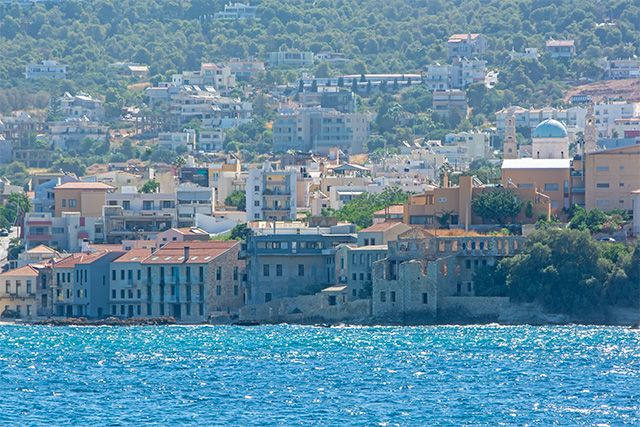
Chalepa is one of Chania’s most historically significant districts, closely tied to the city’s modern identity. In the 19th century, during Ottoman rule, Chalepa emerged as a diplomatic and political center, hosting foreign consulates and elegant neoclassical residences built by wealthy locals and European officials. Many of these buildings have been turned into smart hotels. Chalepa became a focal point of Crete’s struggle for autonomy and union with Greece, most notably as the site of the 1878 Pact of Chalepa, which granted Crete important political freedoms. The area is also associated with Eleftherios Venizelos, Greece’s influential statesman, whose home in Chalepa remains a landmark and today is a museum. Over time, Chalepa evolved from a prestigious suburb into a living historical quarter, where grand mansions, elegant hotels, quiet streets, and seaside views reflect its role in shaping both Chania’s and Greece’s modern history.
The Orthodox church, Saint Mary Magdalene is worth a visit. It has been built in the Russian style as it was funded completely by the Russian Grand Duke. This doesn't take anything away from the stunning architecture of the building. The Russians and the British had a big hand in the loosening of the Ottomans grip on Crete at the end of the 19th century. The Archaeological museum has now been moved from the Town and is housed in a new building nearby.
Slavery was huge as the Ottomans used Crete as a staging post before sending the slaves to Turkey. The area to the west of Chalepa called Koum Kapi is where the slaves would come ashore. Some of the old walls can still be seen where the slaves were herded through the " koum kapi " or sand gate in the wall. When Crete joined Greece the slave trade quickly died out.
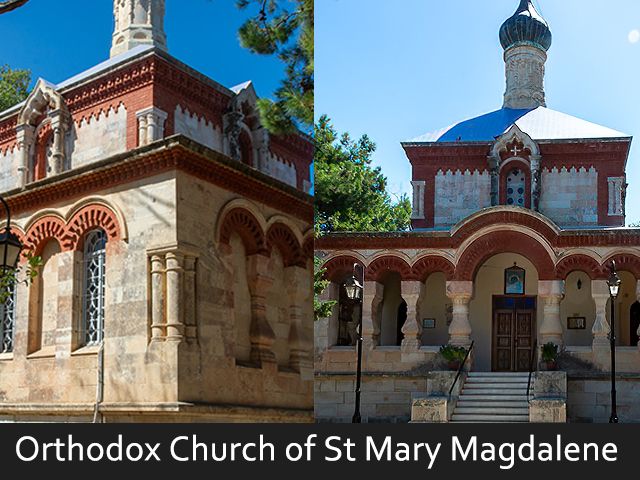
Beautiful 19th century Russian architecture of the Church of St Mary Magdalene. The church was funded by the Russian Grand Duke so he was allowed to choose how the church would be built.
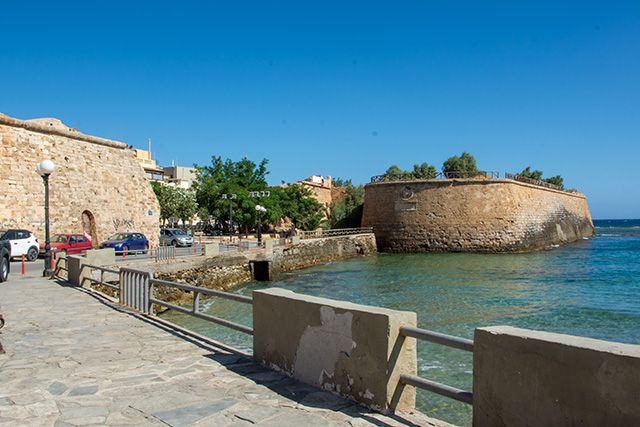
Koum Kapi where it meets Splantzia, north of the city walls. A large part of the wall was removed for the road you can see in the background.
There's a few good places to eat in Chalepa, maybe the best is Thalassino Ageri, a romantic fish restaurant where you can dine with your feet in the sea. Food is excellent.
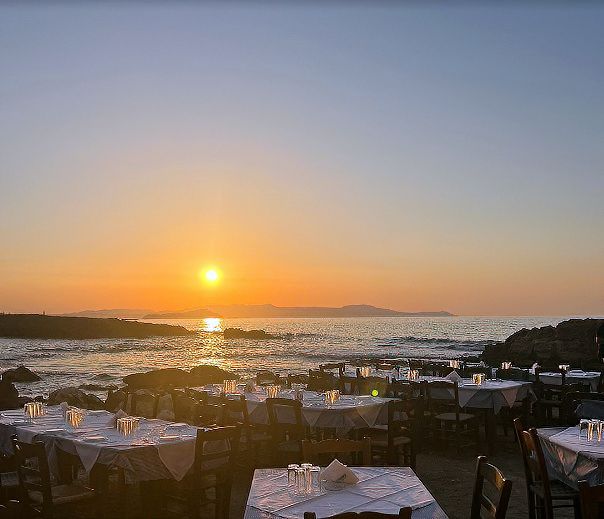
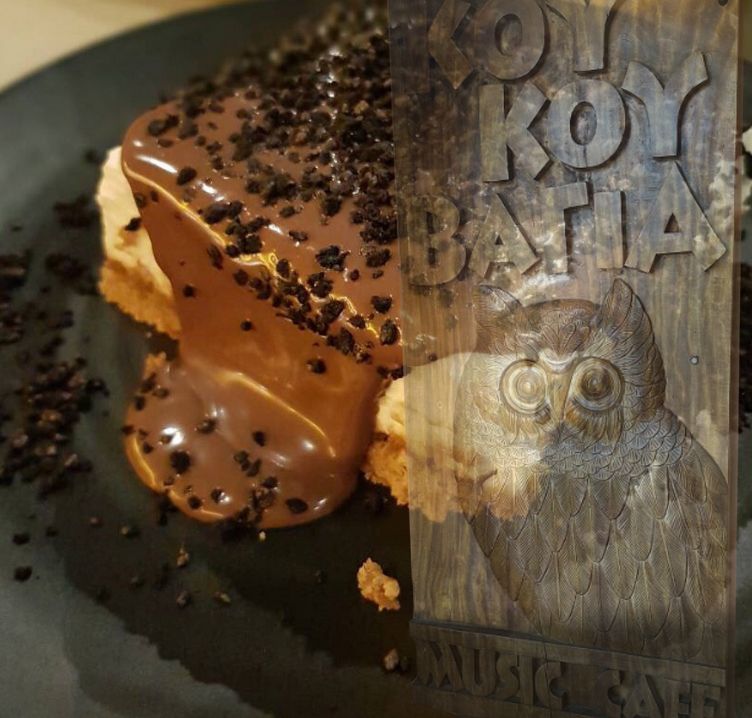
What if you're exploring early and you just fancy something sweet, then you cannot go wrong with The Owl cafe or KoukouVaria. Cakes of every description and a great view of Chania. The cafe is just north of the tourist hotspot Venezelos graves.
Next up has to be Kourtaliotiko Waterfalls et al.
These falls are quite famous for tourists and expats who love to walk gorges and canyon down the brisk rivers as many believe the gorge to be second only to Samaria.
OK. I have not been to the falls, nor walked the footpath to Preveli beach. I've been told the best way to appreciat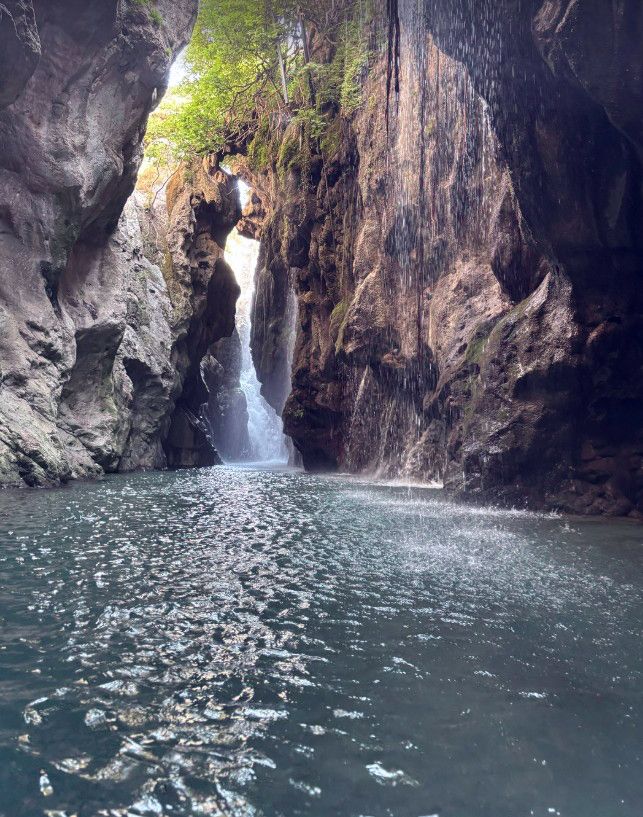 e this fabulous gorge is by canyoning to the sea, something I certainly wouldn't be able to do. You can walk, scramble or partly swim your way to the beautiful beach at Preveli. A couple of other things picked up from the Wikipedia text. I have it on fairly good authority that the footpath walk takes four and a half hours not two and a half. Secondly, it is hardly worth mentioning about water snakes as they would not come anywhere near people swimming. Oops, there I go, I mentioned the snakes. There are no poisonous snakes nor are there any great big pythons on Crete, but there are water snakes, Dice snakes, which you may or may not see.
I have friends who swim in the lake below the waterfalls and they said it is a great experience. This may be one of the best days out on Crete, not for small children though.
The Kourtaliotiko river and gorge is sometimes called the Asomatos river and gorge and it flows to the sea at Preveli and lies directly south of Rethymno.
One of the largest and rarest predators on Crete is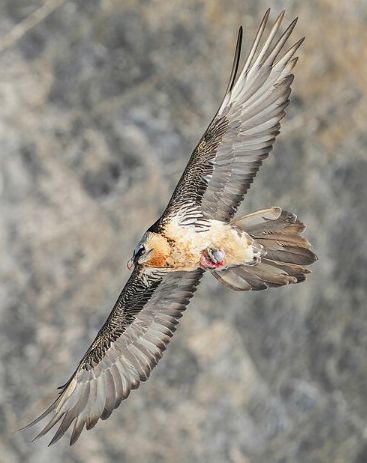 the Bearded Vulture or Lammergeier, Gypaetus Barbatus. You may be lucky to spot one as you meander through the gorge. I've only ever seen one pair, above the Imbros gorge.
Crete has about 25 of these bearded vultures but only 9 or 10 breeding pairs. The island is one of the last homes of these fabulous birds. Strangely it feeds solely on bones.
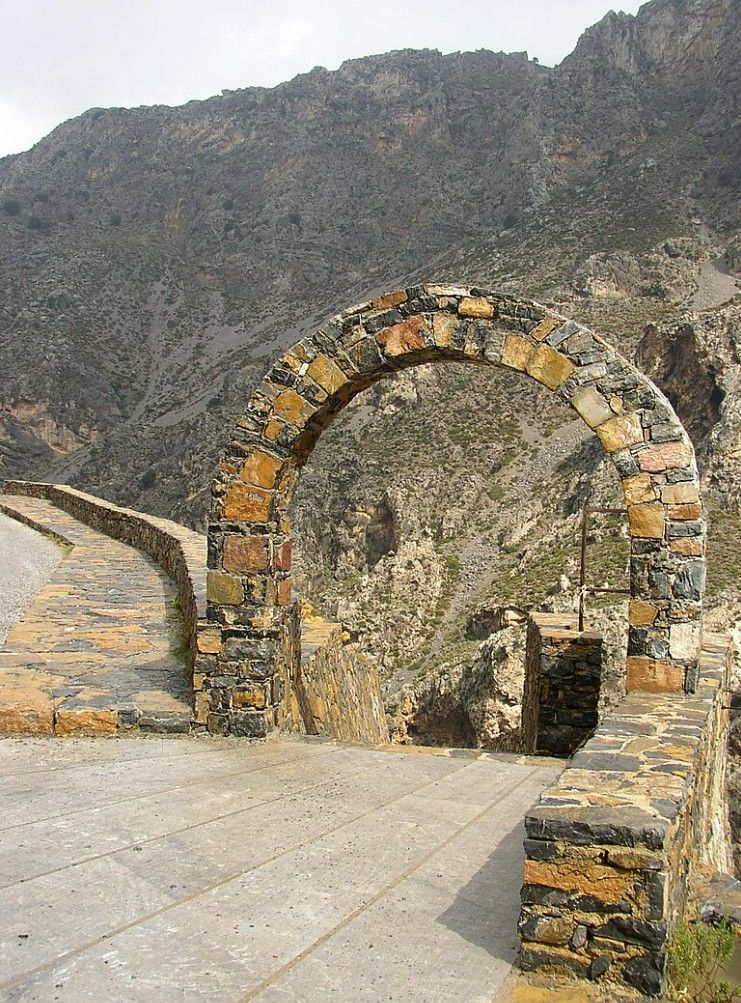
Northern entrance to the gorge. The entrance lies to the east of the village of Asomatos just after a tight bend in the road.
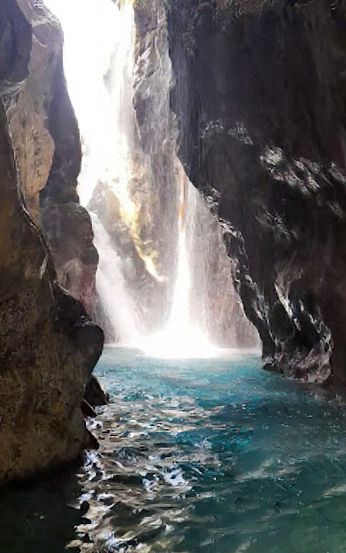
The gorge of many names Kourtaliotiko, Asomatos, Kissano, Preveli, depending on which map you use, works its way south through a protected palm forest and several water falls before emerging onto the popular beach below Prevelli Monastery.
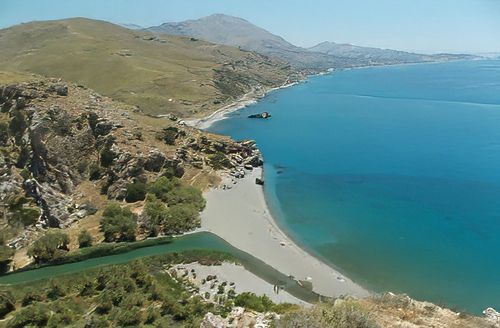
Prevelli beach, Rethymno region.
The Katholiko Monastery, sometimes called the Monastery of John the Hermit is believed to have been built in the 11th century.
It's about an hour walk through Avlaki gorge from where you park the car at Gouverneto Monastery, but it may be a bit longer coming back as it is uphill all the way.
Now, if you found the Samaria gorge challenging but you managed it OK, then the hike to this old monastery should be fine. The best way to tackle this is to visit in the morning before the sun reaches its zenith. It's about 30 to 40 minutes downhill to the monastery and a further 20 minutes to a little fjord. Warning: you are not allowed to enter the sea here as the monks at Gouverneto Monastery ( the one you pass when you park your car ) have designated it as a religious area.
Make sure you have plenty of water and some shade, Probably a mobile phone would be good also. Don't forget water for the return journey also, as it is all uphill.
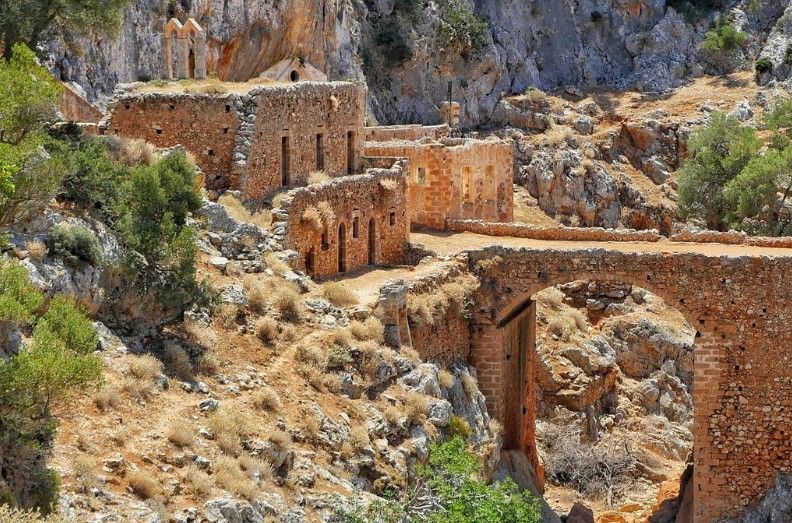
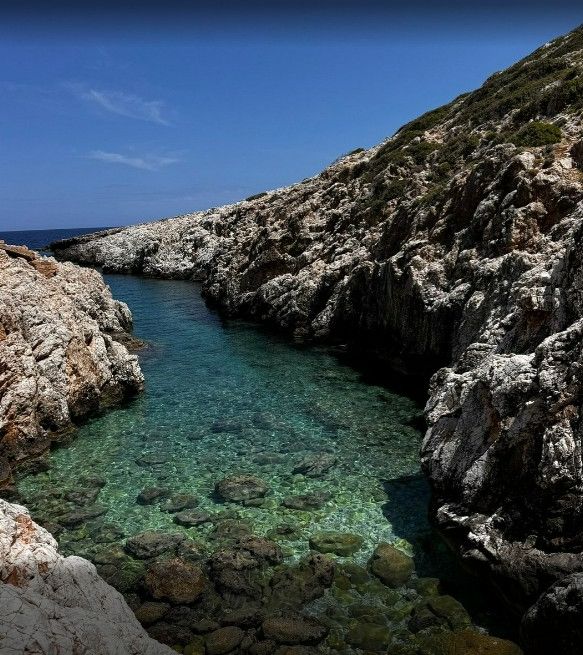
Some historians claim the monastery, also known as the Monastery of John the Hermit, to be the oldest on Crete, but this remains unproven. Anyway the monastery sits in the marvellous secluded Avlaki Gorge and is great for taking photographs. The only things that should be taken from here is photography.
If you get to Gouverneto but see the journey below as too gruelling or too hot, then please do not attempt it as it may spoil your holiday. I have a great alternative for you and it isn't far. Just head back towards the airport. You passed it The Holy Trinity Monastery.
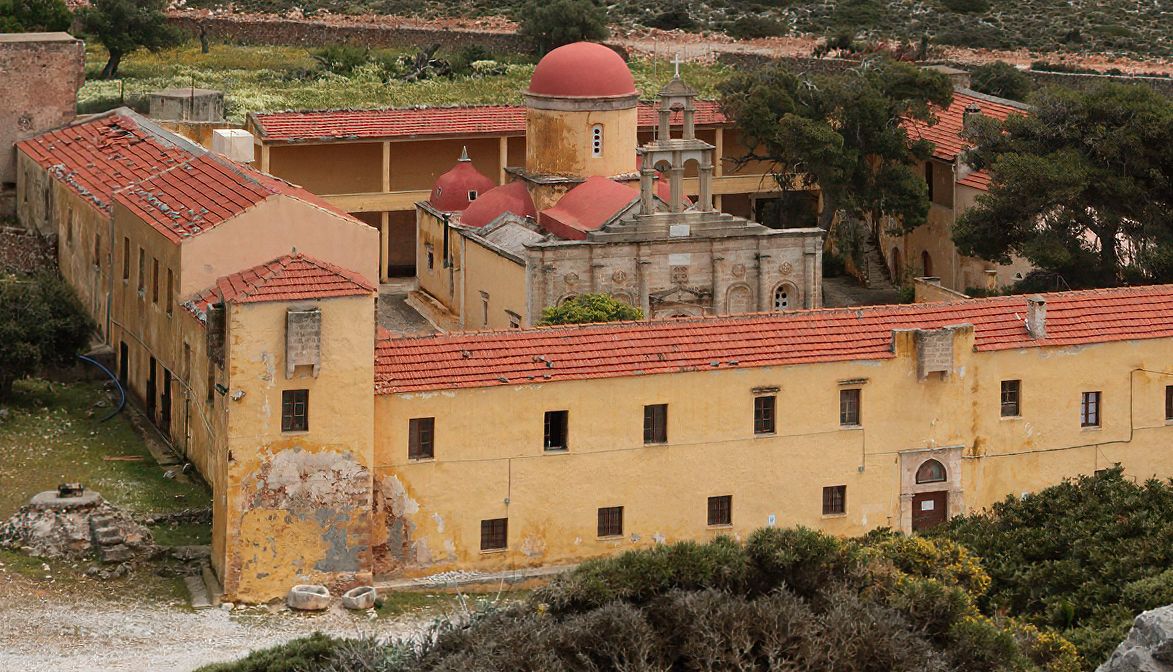
The Gouverneto Monastery, also known as Our Lady of the Angels is a Greek Orthodox Church that looks over the pass down to the Katholiko of St John the Hermit. Gouverneto has a venetian facade to the katholiko within the Monastery. It was built during the 16th century but was deserted by the monks soon after due to pirates in this area. Later, special authorization had to be granted by the governing Turks to allow monks to complete it.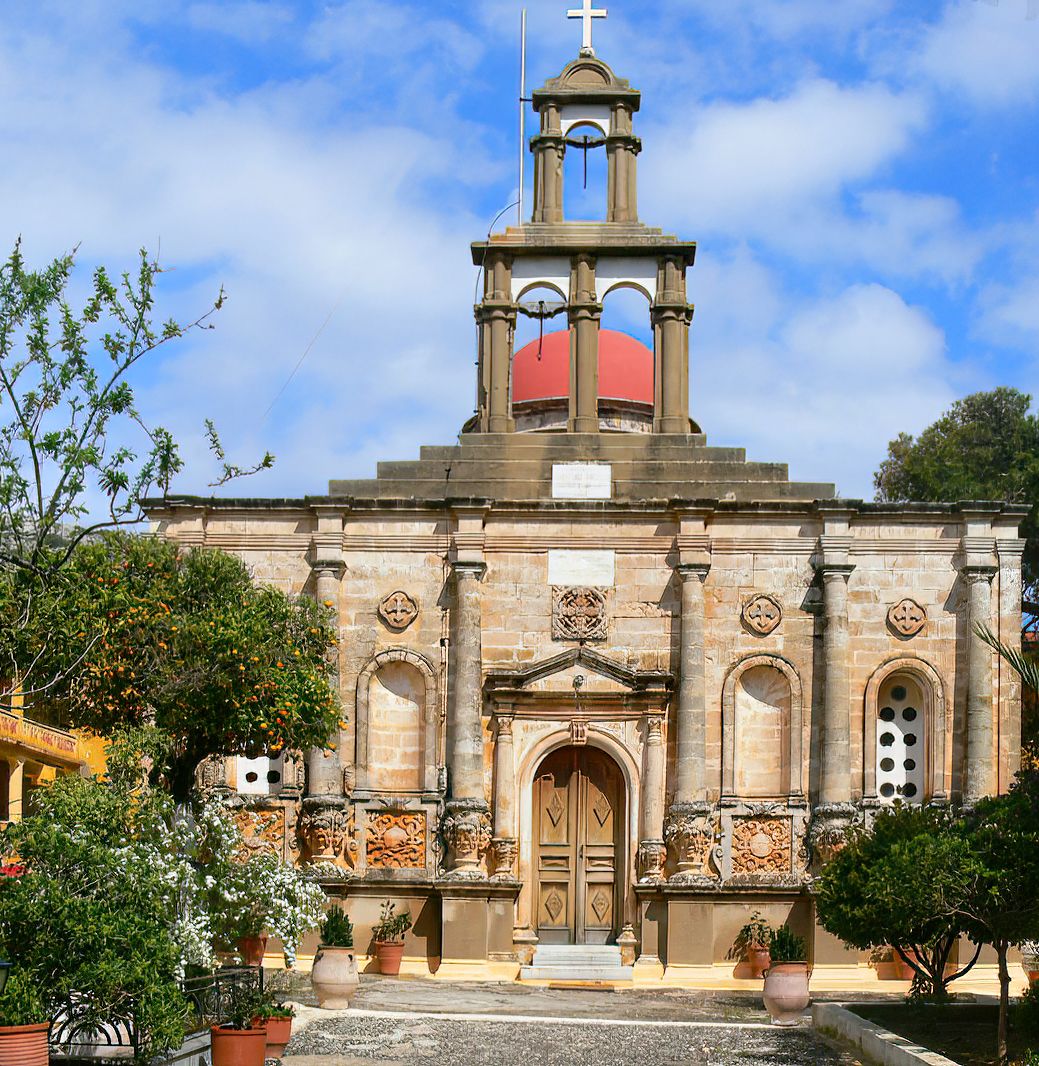
The Monastery has many examples of Orthodox architecture but the original building was put in place by Catholic monks in the Venetian period.
Agia Triada Monastery
Known locally as Tsangarolon Monastery after the two brothers who built it.
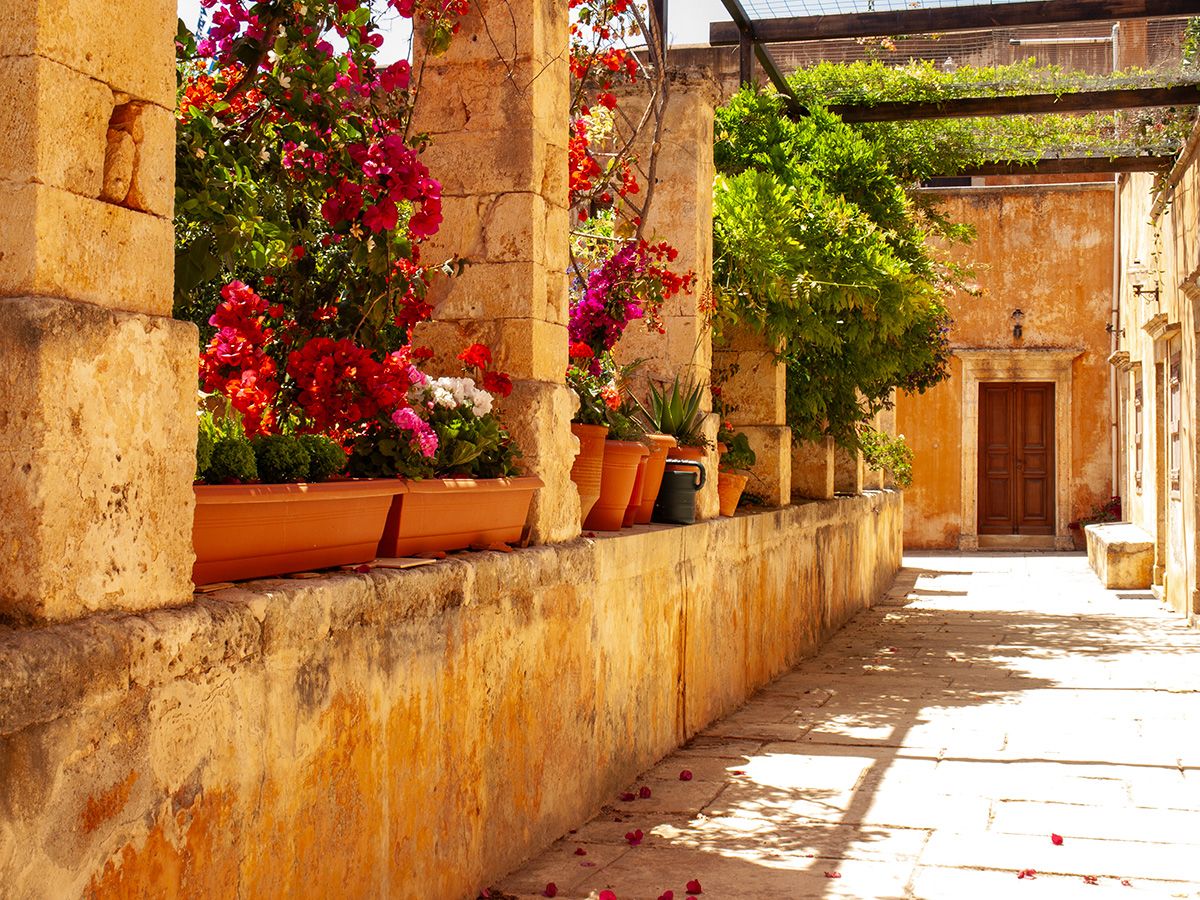
After you walk through the massive doors at the top of the entrance stairs you are met with this eerie silence and overwhelming feeling of peace. Sitting on the bench below the citrus tree you can meditate your whole life. Then a visit to the beautiful Katholiko
( church ). Break away from the main groups if a tourist and admire some of the marvelous planting by the resident monks.
Still not finished as you descend the front steps, turn right and explore the large cellar full of the monks produce and even do some wine tasting at the bar. A great way to spend a few hours.
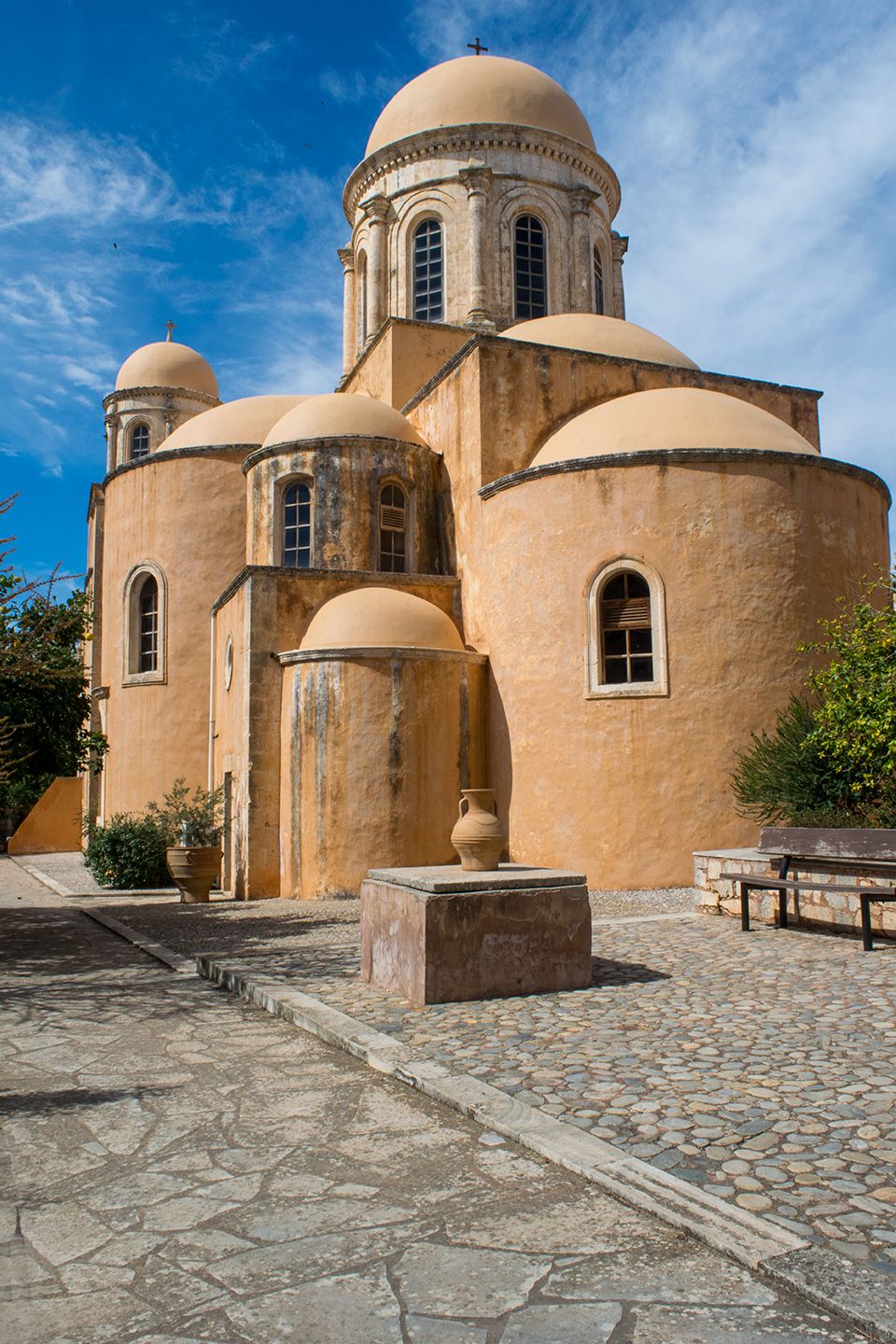
The rear of the Agia Triada Katholiko showing where it splits into three, one for the Panagia Zoodochos Pigi ( the Virgin Mary ), one for St John the Theologian and one for Christ the Saviour.
The Monastery was built by two Venetian brothers from the Zangaroli family in the 17th century. The brothers were converts to the Orthodox faith and became monks.
The monastery has quite a chequered past as it suffered through the reign of the Ottoman empire until 1892 when it was used as a seminary.
OK, enough of monasteries, but not churches just yet. I live in the Apokoronas, north Crete and one of my favourite journeys is to the two churches at Meskla.
At one time there was a good taverna opposite but it was in decline last time I went
I'm not a devout person in any way but the journey to and from Meskla is quite extraordinary. Whichever way you go from Chania, either through Perivolia or via Agia Lake, you will return on the other road, reaching heights of 800 metres above sea level. If you are journeying in the winter, you must have snow chains. It is an offence to not have them. Meskla at 200m is great for photography as is the Theriso gorge which you go through. If you are early enough you can sample the round walk via Serakina gorge which is just outside the village of Meskla.
The new Church of the Panagia ( Virgin Mary ) built in 1972 stands behind the old Byzantine church Sotiris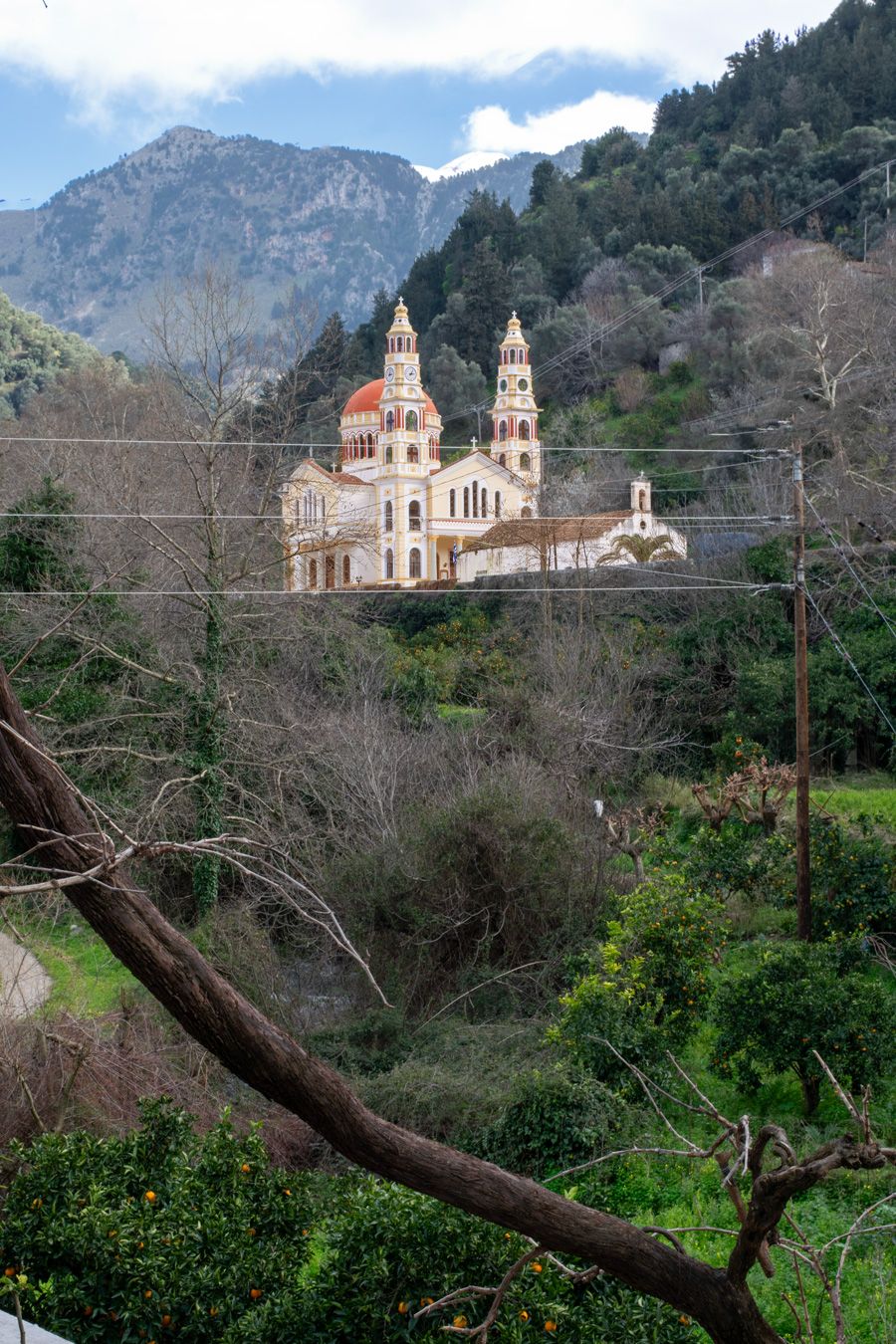 Christou. This single space church has been modernised and unfortunately has lost a lot of its history from the time the goddess of harvest Demeter was worshipped here but you can still admire frescoes from the 14th century.
If the road is quiet you can stand in an area to the north of the church and here the gurgling of the river Keritis which flows underground from Omalos plateau to find daylight in Meskla and on to Platanias to reach the sea. This area in Meskla is renowned for its centuries old plane trees around the spring.
.
.
.
.
.
.
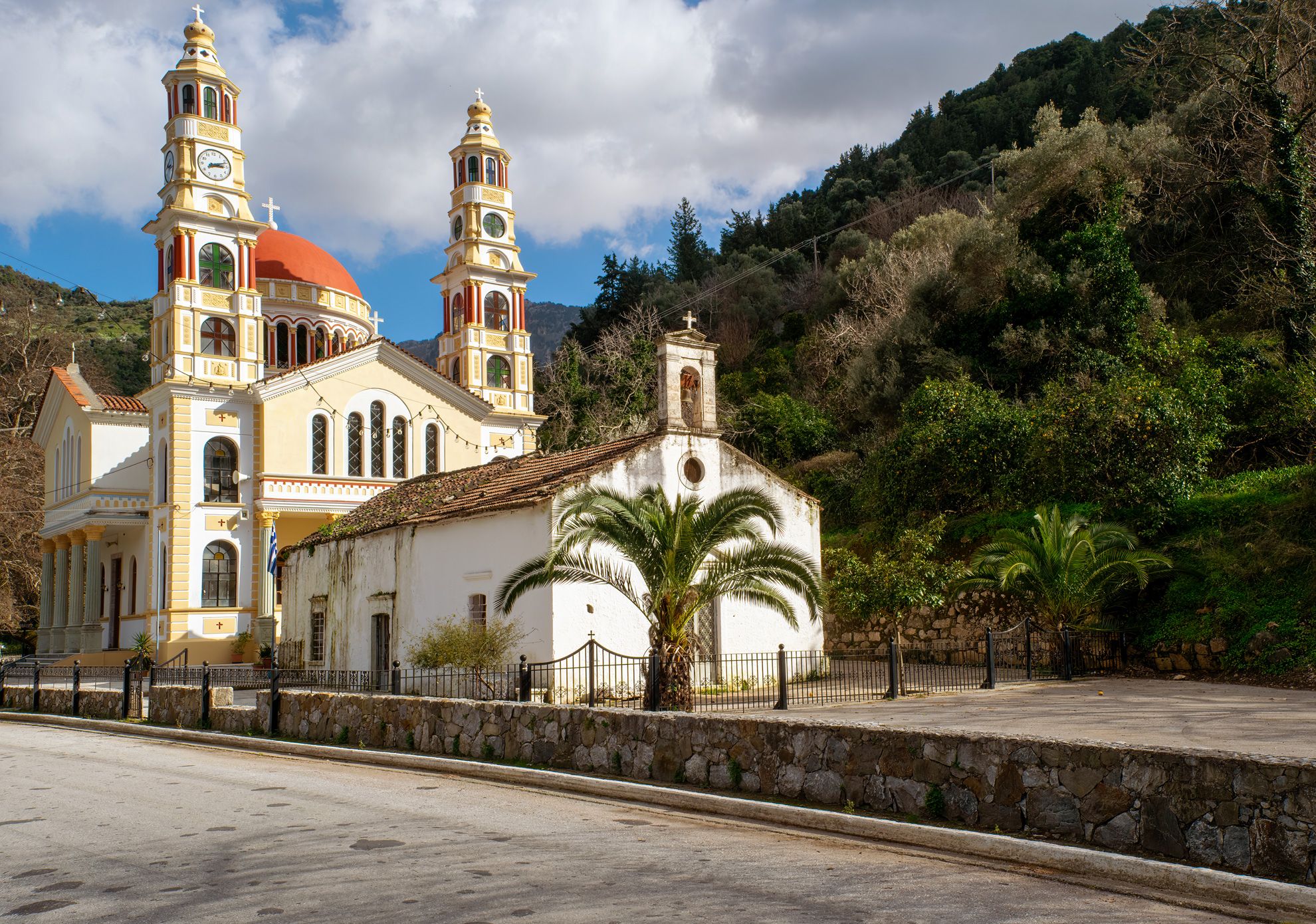
The Church of the Panagia at Meskla with the old Byzantine church at the front.
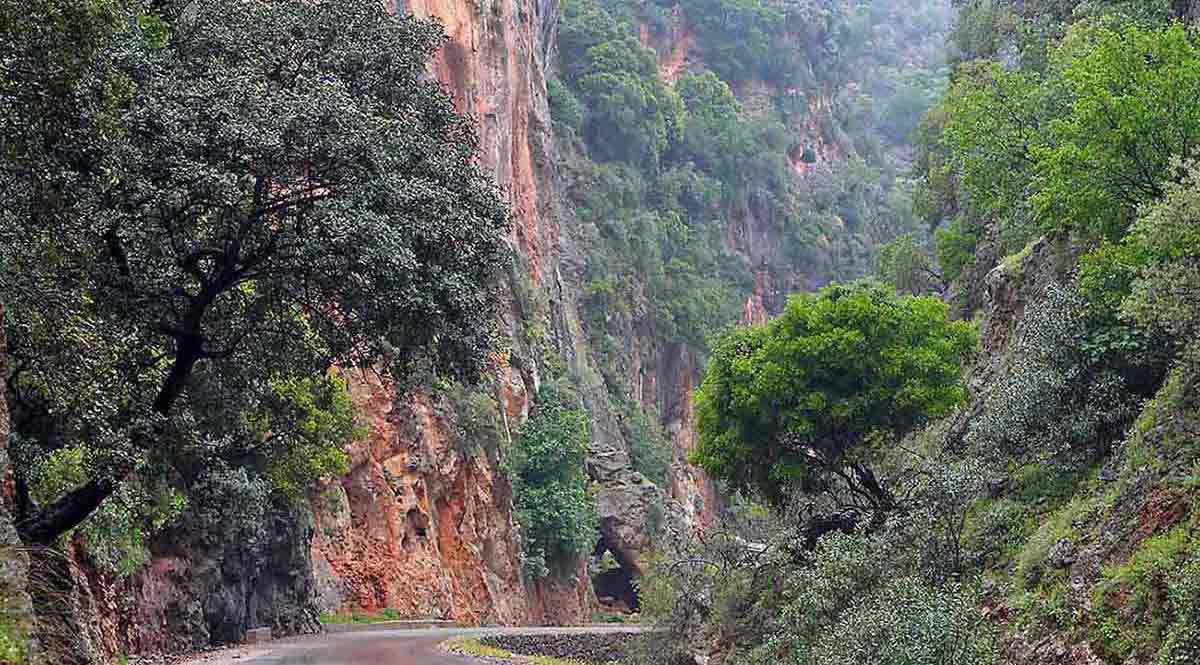
Lush vegetation cloaks the upright cliffs of the Theriso gorge as it winds its way to the famous village of Theriso. Rushing alongside the gorge is the river Kladisos.
Theriso is one of the very few gorges that you can drive through. Whatever time of the year it is beautiful scenery and well worth the visit. There is a small stream, during summer that meanders through the gorge and the road follows this. It may be a raging torrent in late winter, if we are very lucky, as this is a main source of water toward Chania.
The photography is great through the gorge, especially the beautiful plane trees that meander through the gorge alongside the stream.
If you're driving, please keep your eyes on the road as there will be many hikers and even more cyclists as the gorge has a tremendous downward slope that is an absolute delight on a bike, especially since the advent of the electric bicycle which has born many agencies specializing in bike tours with Theriso gorge being a firm favourite.
When you get to the bottom of the gorge, there are a few very good tavernas sprinkled around the village of Theriso or Therisos as it was named before the 20th century.
Therisos is a most important village of Crete, especially for events during the 19th century and the early years of the 20th century. It was the hub of the Therisos Revolution.
It is important to understand where Crete stood after the overthrow of the Ottoman government. Although the rebels, mostly Cretan fighters had scored great victories throughout the island, they had been greatly helped by the major powers of the World and of course they wanted a say. Prince George was appointed High Commissioner, mostly to the delight of the Russians but not these Cretan fighters. From 1898 until 1913, the island was governed by the Cretan State, but these fighters led by Eleftherios Venizelos wanted unification with Greece.
Theriso was a haven and headquarters for these revolutionary fighters who had honed their skills fighting against the Turks and Egyptians and who continued the fight against Prince George's troops. Eventually the Greek King George 1 removed the Prince early in the 20th century but it wasn't until 1913 that Crete finally had its unification with Greece. Most of this has been attributed to the rebels led by Venizelos.
If you're feeling fit, park your car in the car park in front of the church.
Walk north until the sharp bend in the road. Keep a lookout for vehicles, especially electric ones which you cannot hear approach.
Look to your left and you will see the entrance to Sarakina gorge ( Chania ).
Unlike most gorges this gorge has a circular route bringing you back to where you started.
One of the most beautiful gorges but alas one of the shortest.
I've already written quite a bit on the churches at Meskla. Not that I'm a bit deterred as this area is so beautiful.
The large car park is very handy for this short but beautiful gorge. It's about an hours walk in a circle which brings you back to the car park. Follow the map as this gorge used to be hidden before the Local Authority opened up the trails.
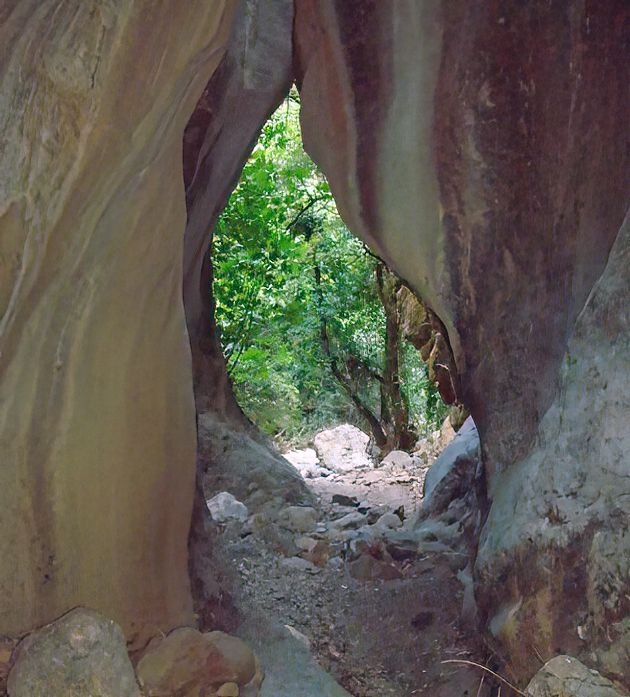
The gorge seems to be sculptured out of the rock in places and timbers, stone and metal have been used to aid crossing the river bed. This is quite an easy gorge to walk but no flip flops please as the hospitals and health centres are busy enough. Remember I've said it before, sensible shoes, some food, plenty of water, not just a small bottle, possibly a mobile phone but definitely a companion.
Oh, how silly of me, a photographer - and don't forget the camera.
The gorge opens out to a beautiful forest of indigenous trees, cypress and large planes and a trail back.
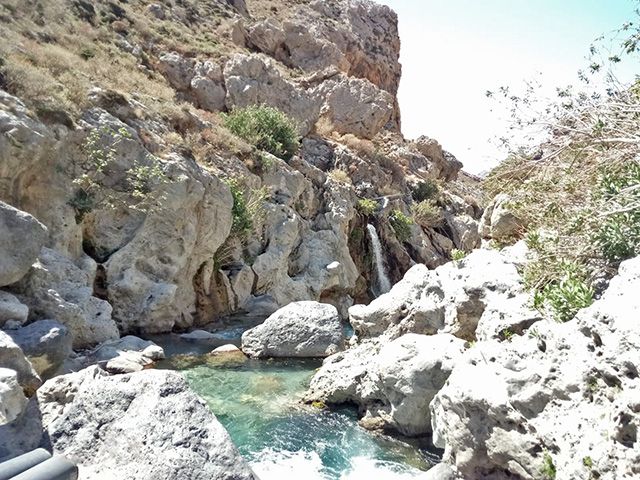
The name and not to be confused with the same name gorge in Lasithi comes from the locals believing that Saracens used to hide in there. No, I don't know why they should. Seems bizarre to me. Yes, I know they did build Iraklion after destroying the Roman capital at Gortyn in the 9th century, but they were only on Crete for a hundred years. Hardly long enough to have something named after them, don't you think ?
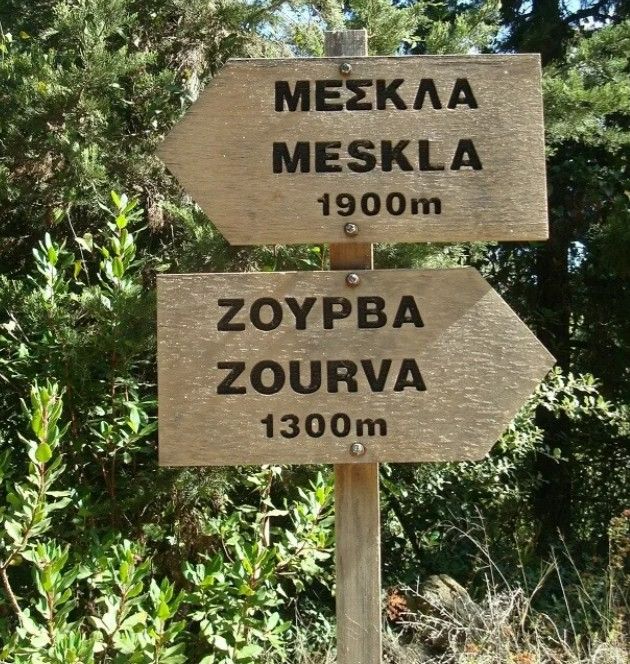
However if you feel that this gorge is too short, you can follow the signposts to the small village of Zourva. If you are hiking this during winter, as you may be staying at the camp in Zourva, you may find that the village is inaccessible due to deep snow.
When compiling a page of Crete's hidden treasures it is difficult to ignore the gorges.
Samaria and Imbros are the most famous, probably due to their history and their size, but they're hardly hidden.
There are many gorges throughout Crete and we get many tourists whose only aim is to walk all the gorges. I have a couple of friends who may have done this. I've noted a couple of gorges already but there is one that deserves a mention here.
Aradena Gorge
This may be the most beautiful gorge to explore and you may even espy a Lammergeier, another name for the bearded vulture, or even a griffon vulture.
You can descend into the gorge at Aradena, via a cobbled mule track, but I understand that is where most accidents happen. Many people will go the other way, starting at the beautiful beach of Marmara. This way you are walking uphill and less likely to slip. You must wear sensible hiking shoes and do not attempt the gorge on your own. Many of the old wooden railings have gone or are very unstable. The walk should take about 3 hours. We, that is my wife and I, met a Frenchman a few years ago who had walked Samaria to the sea, then walked from Agia Roumeli to the beach at Marmaras via the E4, then walked up the Aradena gorge and didn't even looked puffed.
To make life easier for travellers to and from Aradena the Vardinogiannis Bridge, a bailey bridge, was donated by the Vardinogiannis brothers to span the gorge. It's quite spectacular and during the summer months plays host to bungee jumpers who come to sample the 138 metre drop from the centre of the bridge. Rather them than me !
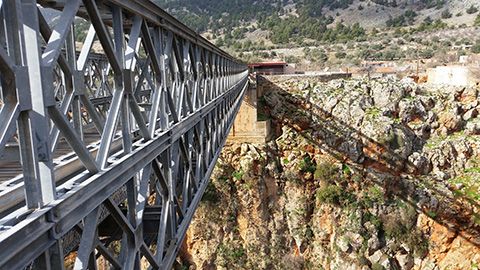
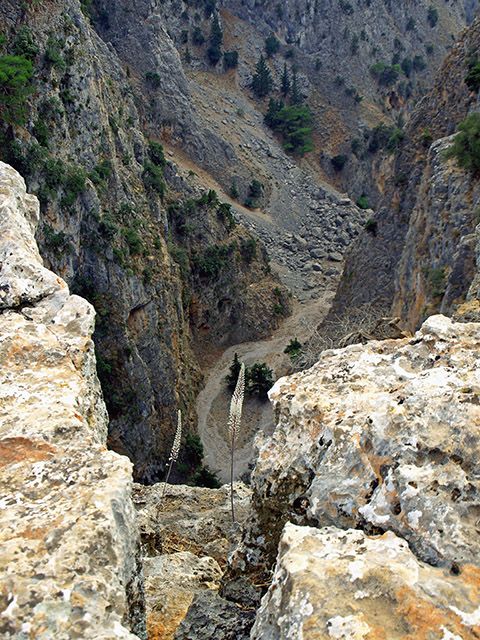
The people of Aradena had to navigate the steep walls of the gorge before the gift of the bridge. The village has a strange history and it is only very recently that a few families are returning to the village. The story goes that two young children in the 1940s from different families were playing in a street in the village. Some stories recount that they were playing with a toy but I prefer that they were playing with a goat's bell when an argument broke out between them over ownership. One of the fathers came out and scolded the child from the opposing family which promptly brought the other father out to remonstrate with his son's position. The next thing a gunfight ensued and several people were killed with a vendetta starting amongst the villagers. This caused the village to become deserted as no families wanted to live in Dodge City.
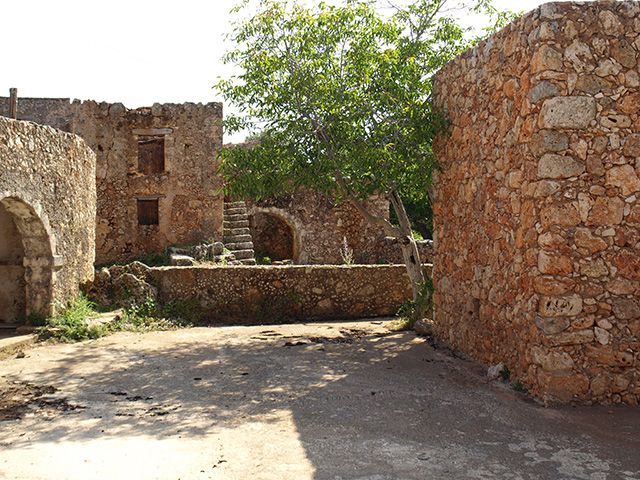
There is plenty to see in and around the village. There is usually a small tea room by the entrance to the village. If you are lucky the Orthodox priest may be in attendance and he will let you view inside the church. Invariably he isn't there and the church is locked.
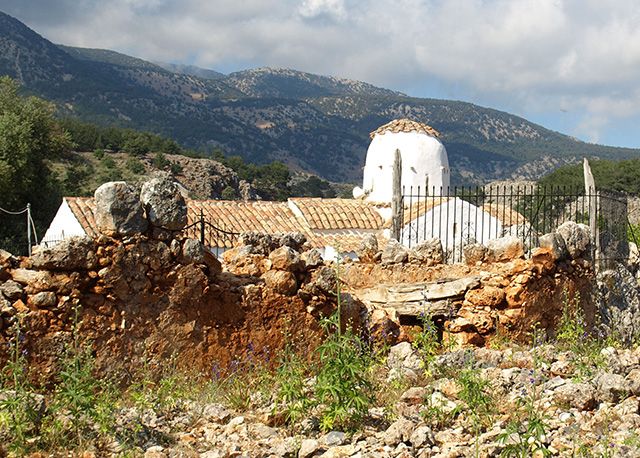
The village affords some great views of Aradena the deepest gorge in Crete at 138 metres and it is actually one of the longest if measured from where it really starts in the White Mountains. However the 7 kms from the village to Marmaras beach can be quite challenging.
There is a taverna at the nearby village of Anopoli, the entrance to the White Mountains, or you can return to sea level at Chora Sfaxion, where there are several excellent tavernas. If you don't mind a hair raising journey you can drive down to the village of Finikas with its crystal clear water and the taverna where the E4 route passes straight through the middle of its dining area.. Although it isn't something I would recommend. Far better to take the interesting hike from Loutro.
I make no apology for returning to monasteries as this one I found to not only be a delightful visit but had a great history.
I came to this place on a coach trip and was lucky enough to witness a christening. I was carrying one of my cameras and they believed I was the official photographer.
Which meant lots of wine, cake and raki which, of course, I tried to refuse but my Greek is very sketchy to say the least. Aren't Greek people wonderful.
Anyway on to Vrontisi Monastery
One of the nicest places I have visited. Built probably in the 10th century as a metochi, regional parish, to the Varsamonero Monastery and added to by the Venetians until during the 16th century Varsamonero Monastery fell into decline and Vrontisi Monastery flourished and became the main Orthodox monastery.
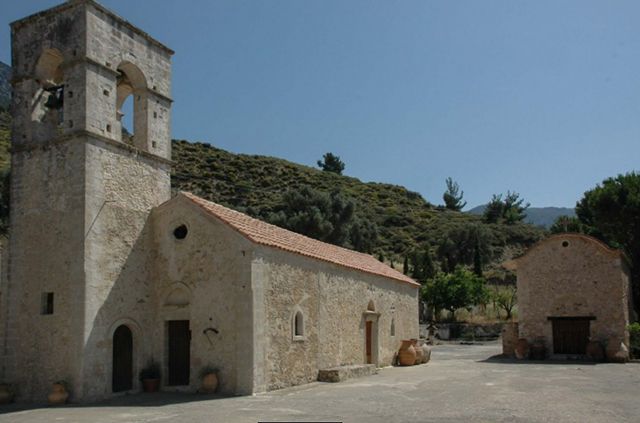
Vrontisi Monastery had a fortified position and was used extensively during the Ottoman occupation as a refuge for the freedom fighters. Local hero Michael Korakas used Vrontisi as his base which saw the Turks destroy much of the monastery and burn many icons and documents. The katholiko, dedicated to St Anthony and St Thomas ( doubting Thomas ) is all that remains along with the beautiful fountain depicting Adam and Eve and the four rivers of the Garden of Eden. The fountain was famous to the Turks and they preferred The Fountain Monastery. The inside of the katholiko is fabulous and must be visited. The bell tower is all that remains of the original Venetian structure.
1943 saw the monastery witness the total destruction of the nearby Vorizia Village by the Germans. This was a reprisal for a raid on the Germans which resulted in the deaths of 13 soldiers. At the end of the war the Greek State started to build a new village but the surviving villagers preferred to rebuild their old homes. The half built village is now a ghost town. You just can't please everyone.
Rouvas Gorge and Zaros Lake
Close to the Monastery, a little to the east we find the village of Zaros and the peaceful freshwater lake of the same name.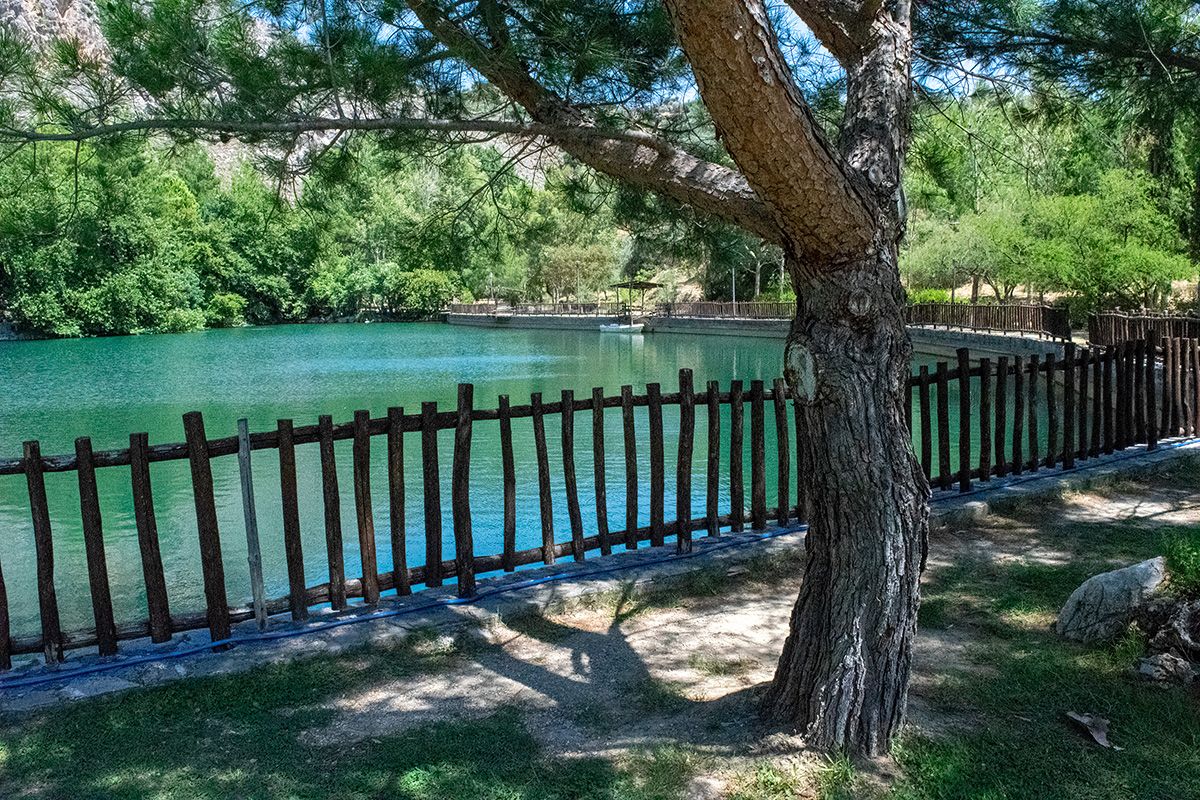
Get to the village for lunch after visiting the monastery, then walk the beautiful Rouvas Gorge.
I've been to the lake which is lovely and quiet and tranquil. A nice place to just sit, watch the fish and ponder the rest of the day.
The gorge and Wood which is signposted is very nearby and definitely worth a look. Unfortunately much of the forested area has been destroyed by fire, but there are still many trees to focus on. The holly trees are of national interest and species starting to form a new wood are aria, zelkova, cypress, pine, plane and pear trees.
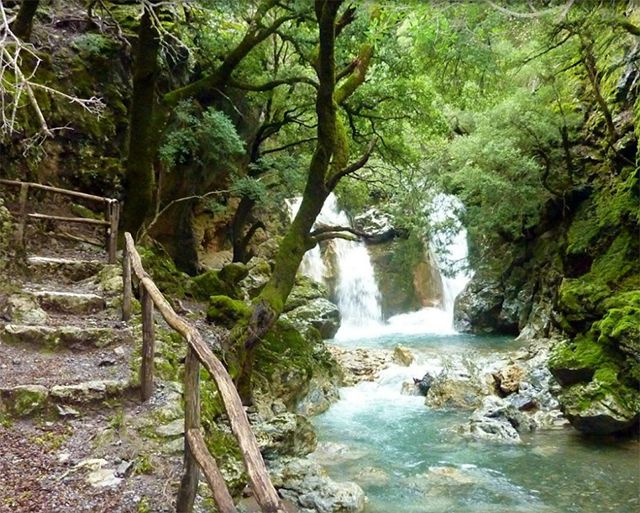
There are two routes for the gorge if you wish. The route using the E4 is 5 km long, circuitous and lasts about five hours if you don't stop half way in a clearing with the chapel dedicated to Agios Ioannis, St. John.
The other route takes in the rest of the gorge and the hike ends at Lake Zaros. This is approx 6 km and takes 5 hours. Whatever route, don't forget to look for the view over the Mesara Plain.
Voulolimni Pool, a very good hidden gem to know about.
Most people heading this way will visit Chrissoskalitissa Monastery and then on to Elafonissi for a swim.
However, during high season these places tend to get packed with tourists. A good alternative are two small pools nearby.
Voulolimni
Even when the west wind blows and the beaches along Crete's western coast become impossible, this little tucked away pool is pretty sheltered.
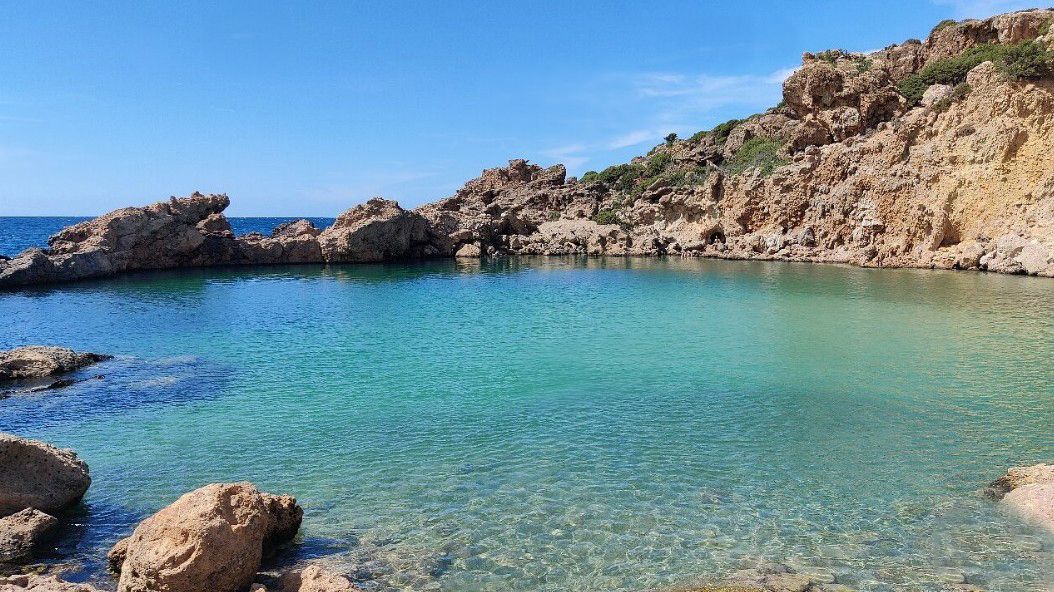
These pool areas are " Protected Areas " due to the indigenous turtles and the rare palms that are trying to grow.
Therefore, do not do anything to upset the environment, do not cause a nuisance, do not leave any rubbish, take everything back that you brought with you. The pool areas have no facilities, so if you are coming during high season, remember water, food and shade.
White Lake Beach
Or to give its Greek name " Aspri Limni ".
If you have read my page on " beaches " then you will have already noted this wonderful little area just west of the Monastery at Chrissoskalitissa and north of Elafonisi. Here is what I wrote:
Just west of the beautifully appointed monastery at Chrisoskalitissa you can find this idyllic and very picturesque sandy beach in front of a small lagoon great for swimming. There are no facilities or amenities unless the nearby hotel has left any beds there. I've included it here because if its too windy for Elafonissi or you're out visiting the monastery, this beach is worth a visit.
It may be an alternative to Voulolimni if the pool area is too crowded. There has been a road extension of sorts and a parking area created by Voulolimni pool, so it may not be as " hidden " as I believed.

The village of Sfendili may not be considered a gem by some people but its recent history is somewhat interesting.
Half the village is submerged by the reservoir after the Aposolemis Dam was built in the early part of the 21st century. Villagers prior to this had an idylic existence alongside a large freshwater lake but following the building of the dam they had to abandon their homes and find alternative places to live.
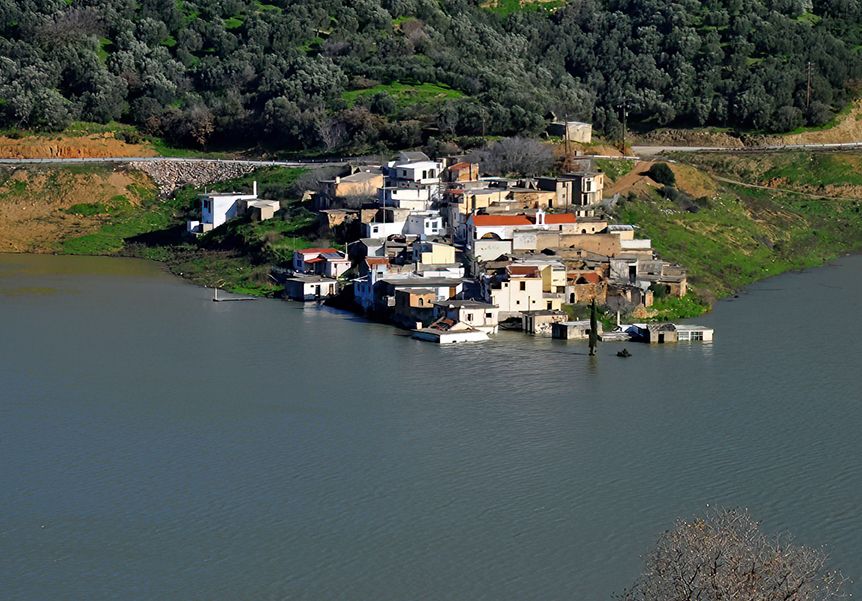
Early in the 21st century it was decided to harness the waters of the Lasithi plateau, so the Aposelemis Dam was built forming a large reservoir where the lake was. Unfortunately from 2012 the inhabitants of the village had to abandon their homes. They were compensated for this and some of the villagers saved all the icons and relics from the old 14th century Byzantine church of Agios Theodoros. The church still stands to this day. Nearby a Minoan burial ground was uncovered showing several skeletons.
The village can now be seen as very little during high water or a bit more during low water. At high water the church is nearly completely submerged. The dam is fed from the Aposelemis river which had its head waters diverted just after the dam was built. The fluctuating dam levels form an additional interest to tourists.
The village can be approached from the village of Ardou at the south east end of the reservoir.
Aposelemi Gorge
There are several ways to walk the gorge. You can start from the north access or the south access. This gorge is considered easy to moderate but there are some very large boulders to navigate so you will need to be fit.
All the usual important points are valid here. You need good hiking boots or shoes, protection for your head, plenty of water, mobile phone with full battery, at least one companion and some food.
It is said that Aposelemi is the most beautiful gorge but I cannot say as I have never walked it. This will be my loss but I will attempt to wet the appetite of any gorge walker or even someone walking a gorge for the first time.
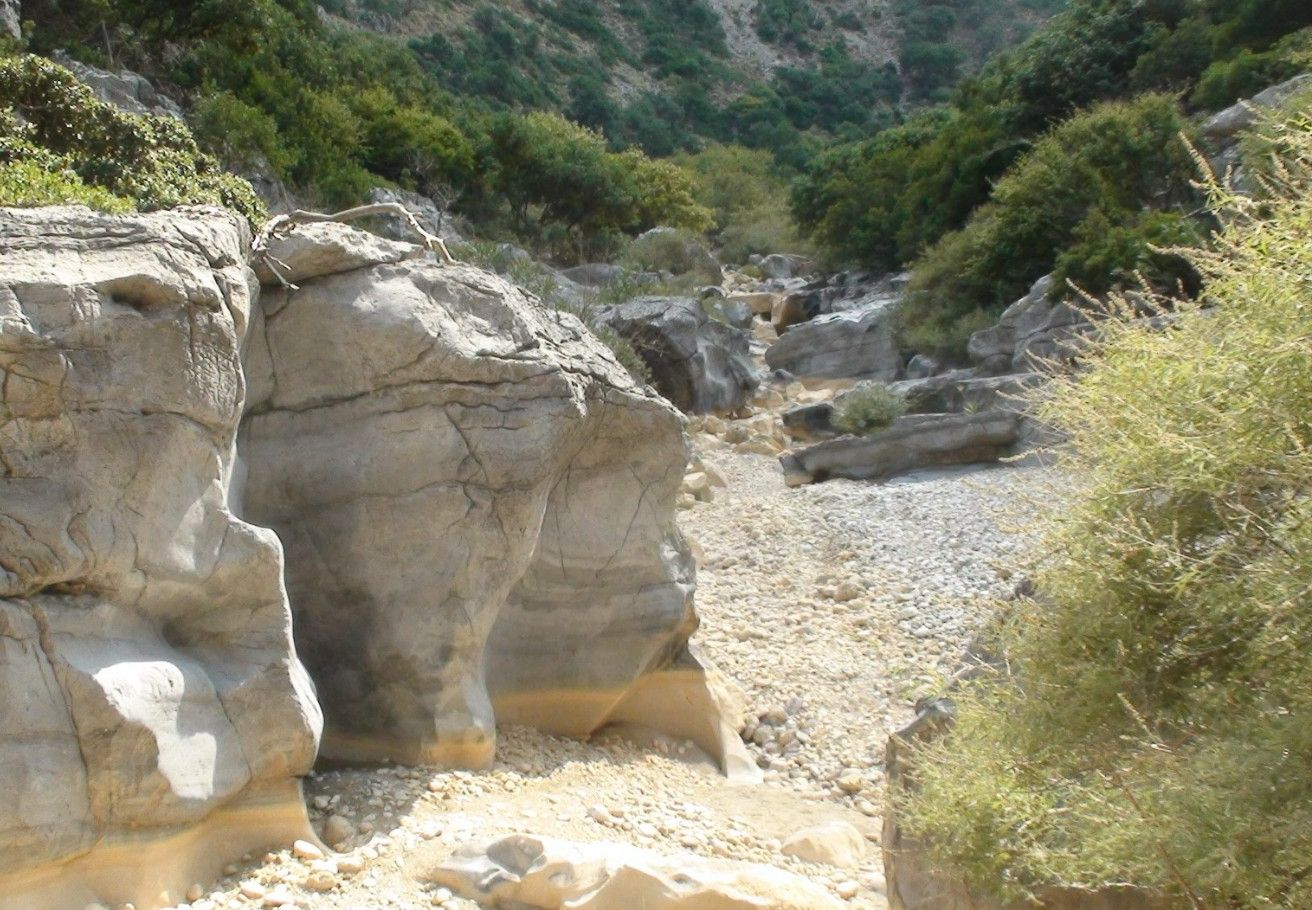
The Municipality have helped by laying a smooth path. The cliffs at each side can reach 200 feet and there is a forest fed from the river Aposelemis that is worth seeing.
I'm have been informed that the best way to walk the gorge is from its northern exit along a dirt road off the highway and just south of Hersonissos but that is really hearsay as I have not been near this gorge so I would definitely suggest reading all you can before venturing onto this gorge.